About RTScale

The consent-provenance layer
for moments that can't be undone.

RTScale started with a narrow question: what happens to consent when the window between intent and irrevocable settlement collapses to zero?

The payment rails got faster. FedNow, RTP, instant card auth — settlement windows that once stretched days now settle in seconds. The fraud infrastructure didn't keep pace. Device fingerprinting and behavioral biometrics can tell you whether the right account is being used. They cannot tell you whether the person using it is acting freely.

Authorized-push-payment scams, elder financial exploitation, coerced wire transfers — these attacks pass every conventional check because the legitimate account holder is the one pressing approve. The account is right. The device is right. The consent is the question.

The answer we kept returning to was an artifact: a compact, cryptographically signed record of observable affective state at the moment of action. Hardware-rooted so it cannot be spoofed by a replay attack. Decomposed so it carries affective indicators — not facial-recognition embeddings, not voiceprints, not raw biometric data. Portable across custody chains, regulatory regimes, and dispute resolution processes. Erasable in a way that satisfies GDPR Article 17 without destroying the evidentiary chain.

We called it the State of Mind Signature. We built it first for banking and payments — the category where the problem is most acute and the regulatory pressure most immediate. Then we asked whether the primitive generalized. It did. Wire fraud. Elder property exploitation. Agentic AI systems authorizing financial actions on behalf of principals. Self-custody crypto wallets under physical coercion. Every case fit the same pattern: a high-stakes, hard-to-reverse moment where the existing evidence of consent was a signed document, a checkbox, or an OAuth token — none of which document the state of mind in which the consent was given.

RTScale is infrastructure for that gap. Not a fraud detection tool. Not a compliance checkbox. The consent-provenance layer for any consequential transaction that is hard or impossible to reverse — at the moment the consent is given, where the existing evidence is thinnest.

Mission

RTScale builds the consent-provenance layer for transactions that are hard or impossible to reverse — at the moment the consent is given, where the existing evidence is thinnest.

Values

How we work and why.

  • Consent over compliance.

    A signed document proves someone acted. It does not prove they understood what they were signing, or that the action was free. We build for the gap between the signature and the consent — not because regulators require it, but because it's the honest measure of what 'authorized' should mean.

  • Precision over persuasion.

    We say what the technology does and what it does not do. The SoM Signature captures observable affective indicators — not inner emotional states, not clinical diagnoses, not moral judgments. Overstating what an ML model can determine is a fast path to misuse. We do not take that path.

  • Privacy by architecture.

    Raw camera frames and audio buffers stay on the device. The cloud receives a decomposed-indicator artifact — affect vectors and keyword-bound microexpression events, not facial-recognition embeddings or voiceprints. Cryptographic erasure satisfies right-to-erasure without deleting the evidentiary record. These are not privacy features added on top; they are the architecture.

  • Trust earned through disclosure.

    Our trust center is not a checkbox. It publishes what we collect, what we do not collect, what our subprocessors touch, and what our responsible-AI framework rules out entirely. Security review is invited. Scrutiny is load-bearing for a product that asks partners to put us in the consent chain of consequential transactions.

  • Irreversibility as the design constraint.

    We started with a narrow question: what happens when the window between intent and irrevocable settlement collapses to zero? The answers turned out to be structural — not just fraud, not just elder exploitation, not just coerced transfers, but a category. Hard-to-reverse moments are underserved by the existing consent infrastructure. That is the category we are building.

Team

Leadership

Team bios and environmental portraits ship at v1.0 launch.

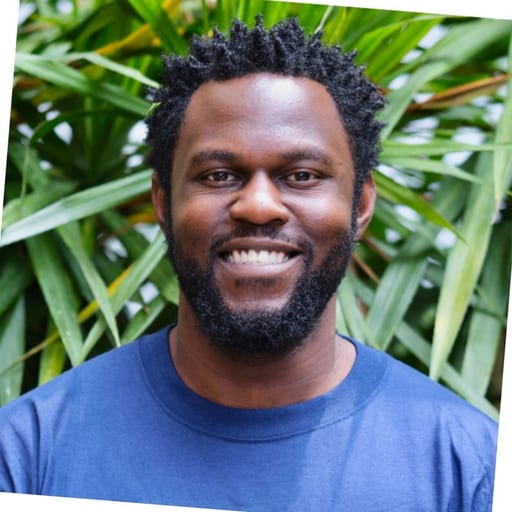
Peter Walker

Co-founder & CEO

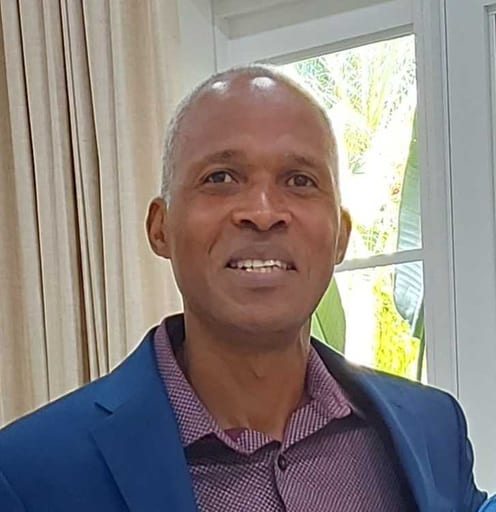
Vivek Iyer

Co-founder & CTO

Work with us. Evaluate us. Challenge us.

Design-partner conversations are open. We're building in public where we can — trust center, protocol specs, compliance library.